






MLB Trade Deadline Winners and Losers: Where do the Cubs and Red Sox Rank, and a Surprise Top Winner?
Choosing the three biggest winners and three biggest losers coming out of the MLB trade deadline in terms of increased chances to win in 2025.
The MLB trade deadline has passed. It was hectic. Moves were flying in from every direction, and no one could keep up, not even the supposed experts reporting on the mass transactions.
Let's look at three winners and three losers from the trade deadline. I am only focusing on the teams fighting for the playoffs, so you won't see the Athletics, who added great prospect talent, or the Twins, who sold anyone and everyone that other teams would take.
You won't see any mention of those prospects below, and I understand that's a big part of it, but we're looking at the teams who set themselves up well (or didn't) for the final two months of 2025. This is about what teams did who had the chance to increase their World Series odds.
For the latest player updates, be sure to head to FantasySP to utilize the real-time player news engine for all sports. The player news engine is the most robust and fastest player news system in fantasy sports. Signing up for a FantasySP membership can help you track all your fantasy players.
Winners
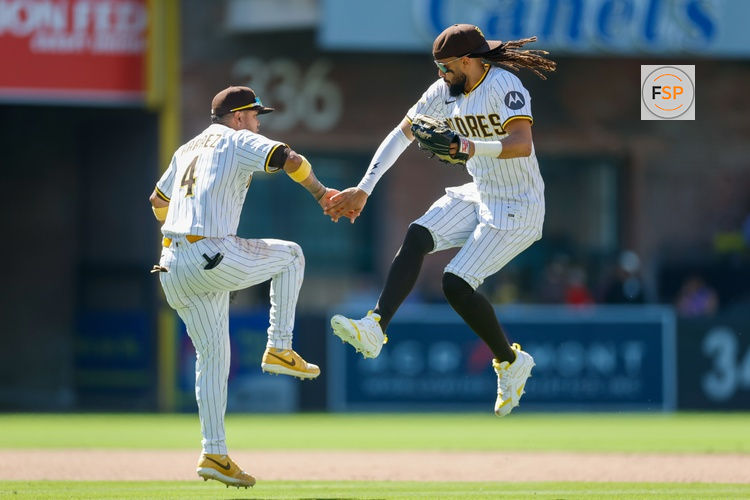
San Diego Padres
I have a hard time choosing between San Diego and Seattle as to who is the biggest winner. If we factor in the prospects traded, then Seattle gets the edge, but I'm only worried about the players who will affect the playoff race in this case, moving the Padres back near the top.
San Diego added good pitchers: starter JP Sears and closer Mason Miller from the A's. They also filled their three biggest holes in the lineup: catcher Freddy Fermin, first baseman/DH Ryan O'Hearn, and outfielder Ramon Laureano, who will fill the left field spot. According to Baseball-Reference (numbers that I will reference often), San Diego ranks in the bottom three in WAR at catcher, left field, DH, and pinch hitter through the end of July.
Maybe most importantly, the Padres were rumored to trade starting pitcher Dylan Cease and/or closer Robert Suarez, something that looked more likely after the Sears and Miller additions. San Diego instead kept everyone and strengthened their roster to the max for the final stretch.
This is now a complete team that looks like it has an answer at every spot, something that will make them a tough group to beat in the postseason.
Connect your league to uncover strengths & weaknesses, waiver assistance, trade scenarios, and get instant start/sit clarity.
Seattle Mariners
I can buy into Seattle being the biggest winner of the deadline even if we don't consider the prospects traded away. The position that most needed help by WAR measures was first base; they took care of that with the Josh Naylor trade last week. Many thought third base was the next place they needed to improve; enter Eugenio Suarez, one of the most sought-after players who moved at the deadline.
Baseball-Reference says that right field is another standout weak spot on the roster, and no moves were made to try fixing that spot, so the team must think they can piece it together with the players on the roster. They also didn't bring in any impact pitchers, expecting a group that was a top unit last year to improve internally, which isn't the worst plan but also is risky.
There is no question that Seattle made huge strides toward contention, and the lineup is now one of the scariest at the top, with Julio Rodriguez, Randy Arozarena, Cal Raleigh, Naylor, and Suarez in some order. Mariner fans have to be happy that their team went for it; it's a very un-Mariners move.
New York Mets
New York started with the bullpen, a group that needed to be both revamped and supplemented after overuse earlier in the season. They added high-ceiling players in Ryan Helsley, the former St. Louis closer, and Tyler Rogers, a submarine pitcher who doesn't strike out many guys but also doesn't walk batters and creates a lot of soft contact. He has a 1.80 ERA and 0.86 WHIP in 50 innings.
They also acquired Gregory Soto from the Orioles, a left-hander to help balance the bullpen who strikes guys out but also walks a few too many. He's much more effective against lefties, but Soto is a worthy addition who can be part of the solution.
The lineup got their boost in center fielder Cedric Mullins, also from Baltimore. The Mets weren't terribly weak at any position, but New York's most-used center fielder, Tyrone Taylor, is a defense-first player hitting .201 with just two homers and 13 doubles. Mullins will play great defense of his own while supplying more power, if nothing else, allowing Taylor to be more of a defensive replacement and bench player.
New York looks to have a strong lineup throughout, especially since Ronny Mauricio has taken over third base, who now has a pitching staff to match. The Phillies made a big addition of their own with former Minnesota closer Jhoan Duran (and Twins outfielder Harrison Bader), but the Mets probably improved more with their moves.
Losers
Chicago Cubs
Chicago is one game behind Milwaukee in the division and leading the NL wild card race. They are in a very good spot to make the postseason. The Cubs didn't necessarily have to make a huge splash. That doesn't mean they shouldn't have, though.
The Brewers operate with a much smaller budget than the Cubs, meaning Chicago theoretically had more room to add veteran talent, maybe even taking that big jump. Instead, they made small moves around the edges, adding utilityman Willi Castro from the Twins (decent pickup) and back-end starters/bullpen guys in Michael Soroka and Andrew Kittredge.
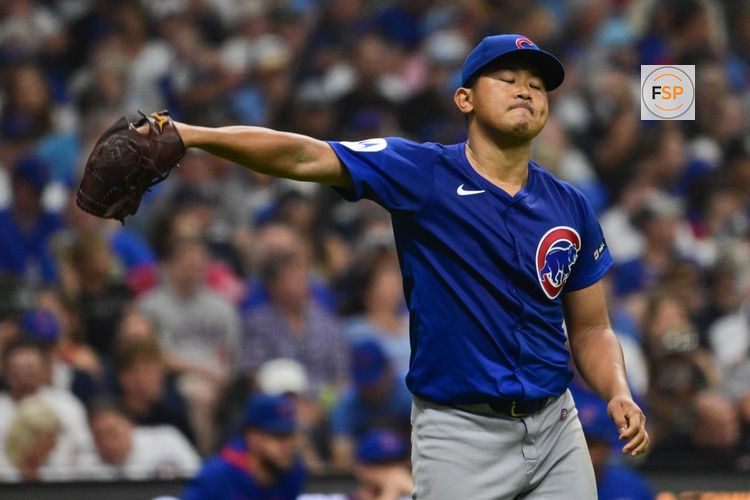
While Cease's name was out there, I was dreaming of the Cubs throwing in a few prospects and adding maybe the top starting pitcher on the market. They stood pat, though, and will count on Shota Imanaga, Matthew Boyd, and Starter 3 to top their playoff rotation.
Chicago is more of a loser than their division-mates who didn't do much because, again, they should have the bigger budget and more room to make moves. Instead, they stayed at the same level as Milwaukee.
Detroit Tigers
The Tigers were alone at the top of the standings not too long ago, but they lost four in a row entering the All-Star break and returned to action by losing eight of their next nine. They have now won their past four, but Detroit is right in line with the other division leaders, and though they should cruise to the playoffs, they had a chance to make a big move or more to increase their World Series chances.
They added bulk pitchers, getting back-end starters Charlie Morton and Chris Paddack and relief pitchers Kyle Finnegan and Paul Sewald, both of whom should fall in as mid-to-late-inning bullpen guys. That's fine; no one ever had too many pitchers. Detroit could have aimed higher, though, with a guy like Cease or even lottery ticket Shane Bieber.
The lineup also could have used either a shortstop or a center fielder, the latter of which I would have preferred. Mullins would have fit here. Bader would have been a good option. Even Luis Robert Jr. of the White Sox could have lifted the ceiling, even with his offensive struggles. The Tigers didn't add any offensive players, though, expecting their current group to carry them.
Maybe it will work, and again, they are pretty much guaranteed the playoffs at this point, but we will look back at this missed chance to add more if the Tigers make an early exit in October.
Boston Red Sox
All the other AL East contenders made moves. There weren't big-time impact players coming in everywhere, but the Yankees solidified their bullpen (David Bednar, Jake Bird, Camilo Doval), the Rays sold a little but brought in veterans to fill those gaps, and the Blue Jays bought that lottery ticket in Bieber, who could hit big for the final stretch and the playoffs, even if he only works in a high-leverage relief role.
Boston brought in Steven Matz and Dustin May, two back-end starter/long relief guys who would have been exciting additions in, like, 2018. Baseball-Reference ranks the Red Sox as 21st in WAR among first basemen and 27th among second basemen, leaving two clear areas to upgrade. They have some exciting young players who might be the future at second, but none of those guys are locking it down now, and a short-term rental, like Minnesota's Castro could have provided a solid if unexciting veteran.
Maybe the right move never materialized, or maybe teams were asking for too much, but it seems like a missed opportunity for Boston to do pretty much nothing when they are five games back in the division and currently sitting in the second wild card spot.