


Fantasy Baseball Implications of the Brewers–Mets Trade
A full fantasy baseball breakdown of Freddy Peralta, Tobias Myers, Jett Williams and Brandon Sproat after the deal
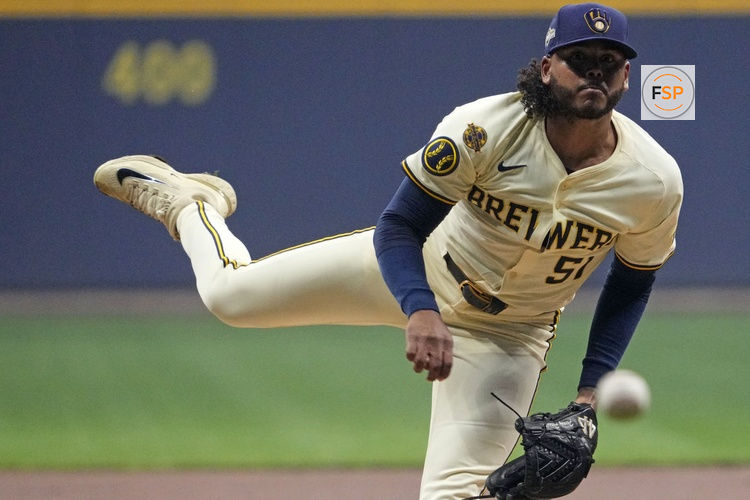
Another big MLB transaction went down on Wednesday when the Brewers and Mets completed a four-player trade. Let's break things down, looking at real world and fantasy baseball implications.
Milwaukee sent Freddy Peralta and Tobias Myers to New York for prospects Jett Williams and Brandon Sproat.
For the latest player updates, be sure to head to FantasySP to utilize the real-time player news engine for all sports. The player news engine is the most robust and fastest player news system in fantasy sports. Signing up for a FantasySP membership can help you track all your fantasy players.
Player Stats
Peralta is the big name in the deal. The 29-year-old right-handed starting pitcher has been in the big leagues for eight years, all with Milwaukee.
He has a career 70-42 record and 3.59 earned run average. Over 931 innings, Peralta has allowed 392 runs (371 earned) on 694 hits and 360 walks, while striking out 1,153 batters.
Peralta had his best season in 2025, going 17-6 across 33 starts. He covered 176 2/3 innings, allowing 54 runs (53 earned) on 124 hits and 66 walks, while striking out 204 batters.
Connect your league to uncover strengths & weaknesses, waiver assistance, trade scenarios, and get instant start/sit clarity.
Peralta had a 1.08 WHIP last season. His career WHIP mark is 1.13.
Myers made his big league debut for the Brewers two years ago, and has appeared in 49 games (31 starts) since.
The 27-year-old only made six starts across 22 appearances in 2025. Myers went 1-2 with a 3.55 ERA, allowing 21 runs (20 earned) on 54 hits and 15 walks over 50 2/3 innings, while striking out 38 batters.
In 25 starts and 27 appearances in 2024, Myers went 9-6 with a 3.00 ERA. He allowed 52 runs (46 earned) on 126 hits and 36 walks. Myers struck out 127 batters in 138 innings.
Williams is the new No. 3 prospect for Milwaukee, and he ranks 30th overall. Sproat just missed the top-100 overall prospects, but is sixth in a loaded Milwaukee system.
In four minor league seasons, the 22-year-old Williams has played in 294 games and posted a .256 average and .388 on-base percentage. He has 269 total hits, including 31 homers, 65 doubles and 17 triples, while also posting 117 RBIs, 201 runs scored, 90 stolen bases, 206 walks and 290 strikeouts.
Williams has made it up to Triple-A, but has yet to make his MLB debut. That should come in 2026 at some point.
Sproat is a 25-year-old right-handed pitcher who made his MLB debut in 2025. He made four starts for the Mets, going 0-2 with a 4.79 ERA over 20 2/3 innings. Sproat allowed 11 runs on 18 hits and seven walks, while striking out 17 batters.
In just two years of minor league experience, Sproat went 15-10 across 50 games (48 starts) and posted a 3.83 ERA. Over 237 1/3 innings, Sproat had 244 strikeouts, 95 walks and a 1.18 WHIP.
Outlook for Peralta, Myers and the Mets
The Mets needed another high-end pitcher for their rotation, and acquired one by dealing for Peralta. He should be near the top end of the starting rotation, but certainly has a rotation spot locked in at the very least.
Milwaukee is consistently a good defensive team, so it wouldn't shock me to see Peralta's numbers drop a bit. He'll have a chance to win every time he starts, but getting to 17 wins again seems a little far-fetched.
I still think Peralta will be a very good fantasy starting pitcher for 2026. He might not always go super deep into starts, but a solid WHIP and high strikeout totals allow Peralta to rack up plenty of fantasy points. I'll be interested to see exactly where Peralta is being drafted going into 2026.
Right now, the rest of the projected rotation for the Mets includes Nolan McLean, David Peterson, Clay Holmes, Sean Manaea and Kodai Senga. Adding Peralta might not take any of those guys out of the rotation, but if the Mets indeed go with a six-man rotation, each guy will make a couple fewer starts over the course of the season, so that's something to keep in mind.
We might not know until closer to the season as to how exactly the Mets are going to go about things with their rotation. That's something to track between now and the start of the regular season.
Myers has starting experience, and could fill in when needed, but looks destined to be a bullpen arm, and maybe a long reliever for New York. With six better SPs ahead of him, Myers' outlook for 2026 isn't super high.
A couple injuries could get Myers into the rotation consistently, so he's a name to keep in mind. At the start of the year, he's just a deep, deep league fantasy asset.
Adding Peralta and Myers to the mix might slow call ups for some pitching prospects, like Jonah Tong, Jack Wenninger, Jonathan Pintaro, Dylan Ross, Ryan Lambert, Zach Thornton, R.J. Gordon, Douglas Orellana and others.
It also means the Mets have depth to spare. I wouldn't be surprised if they use some pitchers to package with other players to go get more top-end talent.
Outlook for Williams, Sproat and the Brewers
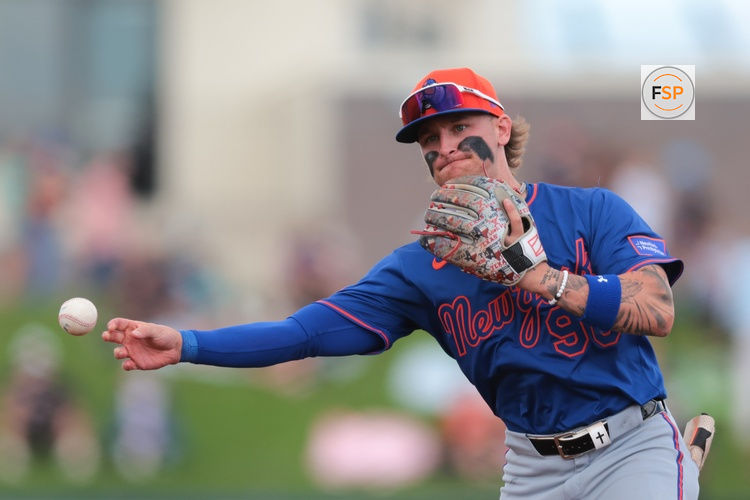
Williams has played second base, shortstop and center field in the minor leagues, so he could be a utility option for Milwaukee to kick off the regular season.
That versatility could get the 5-foot-7, 175-pound Williams to the big leagues, and keep him there, which is half the fantasy battle. He has average-or-better tools across the board, but his running is his best tool.
Milwaukee has Brice Turang at second base, so that's a no go for Williams. Shortstop is an area where help could be needed after Joey Ortiz struggled mightily last season. The Brewers could also reconfigure their outfield to get Williams regular playing time.
Williams will definitely be a prospect to watch in spring training. He has deep-league appeal, at least, to kick off the season, and could become a standard league option with solid big league results.
Jackson Chourio and Sal Frelick look pretty locked in to starting outfield spots, but Jake Bauers and Blake Perkins are in a projected platoon in left field. Garrett Mitchell is another big league outfielder who Williams will have to beat out for regular playing time.
I think Williams will eventually carve out a full-time role at a spot, or maybe just rotate around the field, starting everyday that way. He's definitely a fantasy player to keep tabs on in 2026.
Sproat didn't have a clear path to the rotation with the Mets, and it won't be much easier with Milwaukee. Right now, he's projected to start the season in the minor leagues, but a good showing in spring training could mean he's on the big league team right away.
Brandon Woodruff, Jacob Misiorowski and Quinn Priester look like the locked-in starting pitchers for Milwaukee. Chad Patrick and Logan Henderson are the other projected starters, with DL Hall being the long reliever. Angel Zerpa, Aaron Ashby and Robert Gasser will also fight for the final couple rotation spots.
I think Sproat will eventually work his way into the Brewers' starting rotation, so he's a player to keep tabs on, even if he doesn't start in the rotation, or begins the year in the minor leagues.
Tyson Hardin and Coleman Crow are a couple other starting pitching options among the team's top-30 prospects who could factor in this season. There's lots of options, even after letting go of Peralta and Myers.
Final Thoughts
This was one of my favorite transactions of the offseason.
I think both teams came out well in the deal. New York got two big-league pitchers, while Milwaukee added players on the cusp of regular MLB playing time.
Milwaukee didn't want to pay Peralta next year, so they cashed in on his career 2025 season. Myers is no cheap throw-in, and could have a fantasy impact as well. Peralta is the best fantasy asset in this deal, hands down, though.
Williams and Sproat are a couple young players who could have bright MLB futures. Be watching them as the regular season nears to see if they earn themselves big league roles right away. They'll help out at some point this year, and maybe for years to come.
I don't think there's a clear winner to the trade, and it might take years to truly determine a winner.