Fantasy Baseball Impact of Trades Involving Marcus Semien, Brandon Nimmo, and Sonny Gray
Looking at the real-life and fantasy implications of the first two major trades of the MLB offseason.
The MLB offseason generally develops much more slowly than in the NFL and NBA. While players and teams are ready to jump into deals as soon as free agency begins in the latter sports, baseball's player movement opens with a whimper and moves at a snail's pace.
Top free agents are often still available when Spring Training starts; that's nearly unheard of in football and basketball. With that, baseball fans can easily fall out of touch with what's going on in the offseason, making for surprises when fantasy baseball preparations begin.
Trades come a little more frequently, as teams try to fill holes but also must make decisions on tendering contracts to players, protecting guys from the Rule 5 Draft, and more. Those deadlines bring a lot of minor moves, but we also get some bigger names changing teams when money needs to be moved and teams become realistic about their standing.
Two trades involving fantasy-level players took place in the span of a few days, as the Rangers and Mets swapped offensive big-league players on Monday, then the Red Sox traded a prospect and a young pitcher to the Cardinals for Sonny Gray on Tuesday.
Let's look at both trades, what they mean for the teams involved, and the fantasy baseball impact for each player. There are still plenty of moves to be made by all four teams involved, so we can try to project what might happen next as well.
Use FantasySP's fantasy baseball ADP rankings to stay on top of where players stand throughout the offseason.
Texas and New York Swap Semien and Nimmo
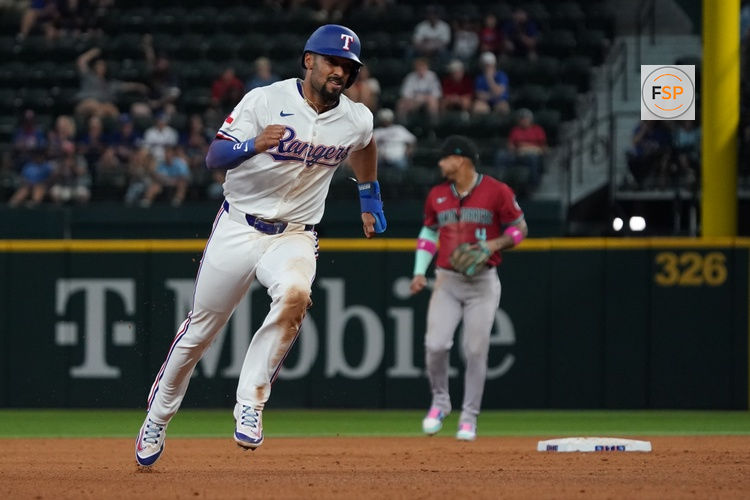
The Rangers have a goal to cut spending, and that was accomplished here. Marcus Semien is set to make $26 million each of the next two seasons then $20 million in 2028. While Nimmo will make more over the life of his contract, his per-year number is just $19.3 million, saving close to $7 million the next two seasons.
Semien is the better player, averaging 3.8 WAR the past two seasons while Nimmo was at 2.6. Nimmo is two-and-a-half years younger and hits for better average; Semien hits for a little more power and plays up the middle at second base, while Nimmo mostly plays in the outfield corners (with spot starts in center).
Connect your league to uncover strengths & weaknesses, waiver assistance, trade scenarios, and get instant start/sit clarity.
It probably doesn't change the outlook much for either team. Texas had a utility infielder in Josh Smith who spent a lot of time at third base last year but could take over second base, and they had a spot open in the outfield after non-tendering Adolis Garcia.
New York has options at the corner outfielder spots, but they need someone who can play center, and Nimmo wasn't the guy to slot there regularly. It wouldn't be a surprise to see the team add a center fielder who can play every day.
There will be more shuffling of players before we see finished products, but both teams come out reasonably with this swap. Each lineup handles the position switch well, and the Mets probably get more upside while the Rangers get to lose some money off their books for the next three seasons.
Fantasy Baseball Impact
Semien might be the winner in this trade because of the change in home ballpark. According to Baseball Savant, Texas' Globe Life Field has been the seventh-worst hitter's park over the past three years, and it was second worst this season ahead of only Seattle.
Citi Field in New York ranked just a hair worse than average for hitters both last year and over the past three, so while Semien isn't moving to a hitter's haven, he is going from one of the worst home parks to something right near the middle. He will also benefit from not playing as often in Seattle, which is regularly among the best pitcher's parks.
On the flip side, Nimmo sees some downside by moving to Texas. You can still think of Nimmo as a guy who will hit over .250 with more than 20 doubles and 20 home runs. Even if his numbers fall off slightly from 2025, he will still reach those marks. He will be ranked among a huge middle ground of outfielders heading into fantasy drafts.
Semien was drafted as one of the top three second basemen in 2025, and after a bit of a down year in which he dealt with injuries, there's a chance he could fall out of the top five. If we expect improvement simply by regression on top of moving to a better home park, then Semien could be a value pick if he falls outside the top five at his position.
Boston Adds Gray to Rotation
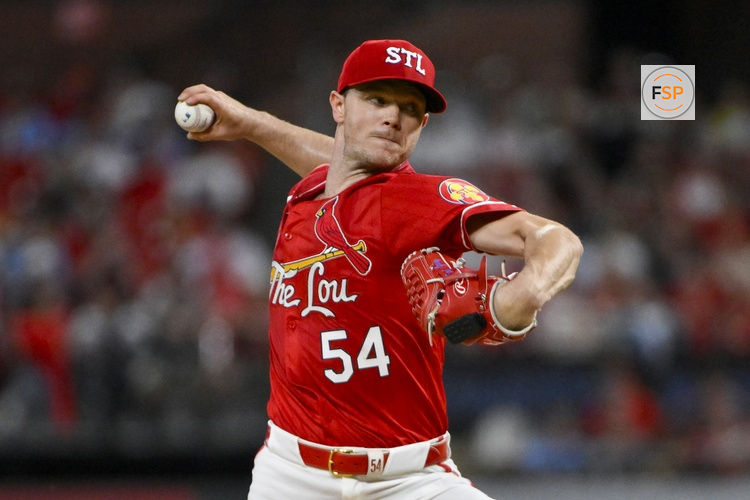
The Red Sox needed to add a No. 2 starting pitcher, and they at least took a swing at that level of production by trading for Sonny Gray. Gray had a good 2025, striking out 201 batters with just 38 walks in 180 2/3 innings. He allowed 185 hits, 93 runs (86 earned), and 25 home runs, each number coming in right around average.
Those are perfectly fine numbers, but a team hoping to win big might like to see that out of their third starter, not their second guy. If Boston adds another high-level pitcher to slot in behind Garrett Crochet, we can evaluate this trade differently.
As it stands, the Red Sox might still be a little short on pitching. That could change if Brayan Bello can find his strikeout touch again or if one of the young guys takes a leap, but that could also be a problem to fix at the trade deadline. It's reasonable for Boston to see if Gray performs up to a certain level, and if they feel they still need an upgrade later, they can add a rental to raise their ceiling.
This is a team ready to compete for the playoffs, so every decision matters. There are a lot of rumors that an outfielder will get traded to help break up a logjam, and that could be a path toward upgrading the pitching staff. If that turns out to be the next move, Boston could soon have a fully rounded roster as good as any in baseball.
Fantasy Baseball Impact
Gray ranked 29th in fantasy points among all pitchers (according to ESPN) and 25th among starting pitchers this season. He made 32 starts and reached 180 innings in two of the past three seasons, topping 200 strikeouts in each of the past two.
He will be drafted in every fantasy league, but the tricky part is determining where he settles in, particularly as a 36-year-old moving to maybe the toughest offensive division. The Yankees and Blue Jays will be among the best offenses in baseball, while the Rays always find a way to piece things together, and the Orioles were a top group as recently as 2024.
Using the same Baseball Savant numbers linked above, Fenway Park was the second-best hitter's park over the past three years and ranked fifth best in 2025. Busch Stadium in St. Louis was right in the middle by the three-year numbers and actually was the seventh-best pitcher's park last year.
Gray is moving to a tougher division and a tougher home ballpark, two things that could hurt his raw numbers. I generally like waiting to draft starting pitchers other than the best of the best, so Gray probably isn't a guy I'll be drafting, but that doesn't mean he won't have success. There is a little downside given the changing circumstances, though he should be in position to pick up more wins in Boston.
The players St. Louis got in return, RHP Richard Fitts and LHP Brandon Clarke, are unlikely to make fantasy impacts this year. Fitts is a lower-level big-league pitcher, and Clarke is in the lower minor leagues; we might see Fitts as a streamer now and then.