


How to Evaluate Traded Pitchers in Fantasy Baseball and Thursday Streaming Options, Including Kumar Rocker
Investigating how to decide if a pitcher is going to improve after being traded mid-season. Also, three starting pitchers in action on Thursday who are widely available in fantasy leagues.
Being traded in the middle of the season is probably a stressful situation. On top of being uprooted and having to move with less than 24 hours' notice, any player with a family must decide between abandoning them for a few months or hastily moving his wife and/or kids across the country.
While the off-field stuff is hard enough, the traded players must also quickly adapt to a new team and teammates. When that move comes at the trade deadline, those players have just two months before the end of the season to get comfortable before a (hopeful) playoff run. It's a whirlwind.
How should we treat those players in fantasy baseball? Context matters a lot, as moving from the Rockies to the Rays, for instance, changes the whole profile around a pitcher and puts him in a much better position to succeed. A batter moving to a hitter-friendly park, on the other hand, gets a sudden boost that might turn him from an also-ran into a valuable fantasy player for a few months.
I want to focus on pitchers here and when we should expect them to perform better or worse. We'll then quickly look at three pitchers in action on Thursday who are widely available in fantasy leagues and could be picked up, though none of them have good matchups.
Check out daily fantasy baseball projections at FantasySP all MLB season!
Connect your league to uncover strengths & weaknesses, waiver assistance, trade scenarios, and get instant start/sit clarity.
When to Expect Improvement
For starting pitchers, this usually means a guy either going to a better team or a more pitcher-friendly park. For the latter point, Baseball Savant keeps track of one-, two-, and three-year rolling park factors to help determine which ballparks are the friendliest to hitters and which are the friendliest to pitchers.
You know Coors Field is a hitter's haven, but did you know that Arizona's Chase Field was second behind Denver in the extra distance traveled on average fly balls every season from 2020-24? Those things matter. Corbin Burnes (who will probably miss all of 2026 after Tommy John surgery) might not be the guy to jump on to return to top-tier numbers when he comes back.
Defense is harder to predict from year to year and game to game, but advanced stats, like defensive runs saved, can help us determine which teams are the best and worst defensively. Luckily, we can evaluate a perfect recent example of a pitcher going from a bottom to a top defensive team, courtesy of numbers from Fangraphs.
You're not going to pick up Seranthony Dominguez in fantasy because he's a middle reliever who almost never gets saves (though he does strike out a lot of batters). Dominguez, though, was just traded from the Orioles to the Blue Jays during a doubleheader the teams were playing on Tuesday. According to those Fangraphs numbers, Toronto is the best defensive team in the league, and Baltimore is fifth worst, far behind the team ranked 25th.
Any pitcher making that same move would have much better support behind him in the field, meaning fewer base hits and runs allowed in his average start. Anyone who played baseball growing up knows how frustrating it can be to pitch in front of a defense who can't make a play.
Going to a better team often means better offense too, though that's not always the case. While that doesn't help that pitcher's numbers, it does give him more chances to pick up wins, something that matters in fantasy baseball. Making a move like Dominguez did is a boon for fantasy value, and a starting pitcher would get the full effects of that change.
When to Expect a Decline
Pretty much the exact opposite of what I just wrote. If a pitcher goes to a more hitter-friendly park, moves to a worse team, and/or begins pitching in front of a worse defense, his numbers are likely to go the wrong direction. You can use those same metrics I linked above.
With pitchers, the performance doesn't always have enough time to fully manifest if he is moved at the trade deadline. Starting pitchers only make about five or six starts per month, meaning the quirks of a small sample will often mean more than anything else. Relievers get even fewer innings, lessening the impact more.
It's more important to focus on the things that a pitcher can control, like his walk rate and strikeout rate. Moving to a new team means learning new catchers and a new ballpark, but guys will usually be pretty consistent with those metrics no matter where they play. When C.C. Sabathia was traded from Cleveland to Milwaukee in 2008, it didn't really matter where he was pitching or who was behind him: Sabathia dominated because he was a dominating pitcher. His own performance mattered most.
Pay attention to those other things, like team defensive performance and ballpark factors, but always count on the pitcher more than the fringe elements around him in a small sample.
Thursday's Streaming Options
- Carlos Carrasco, Atlanta Braves @ Cincinnati Reds
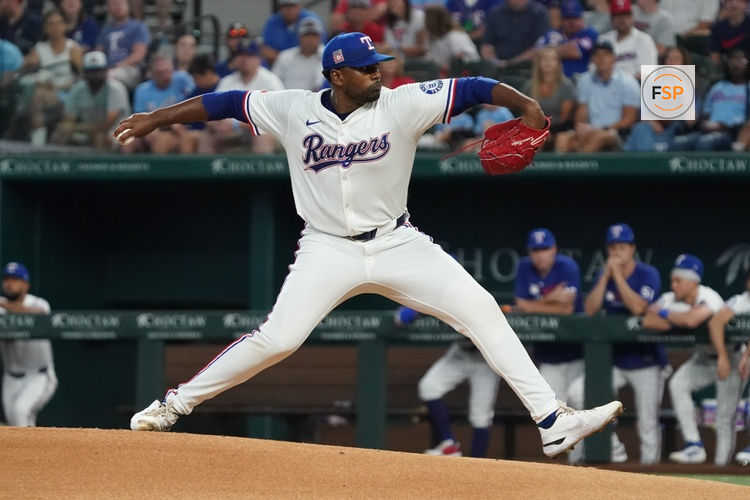
- Kumar Rocker, Texas Rangers @ Seattle Mariners
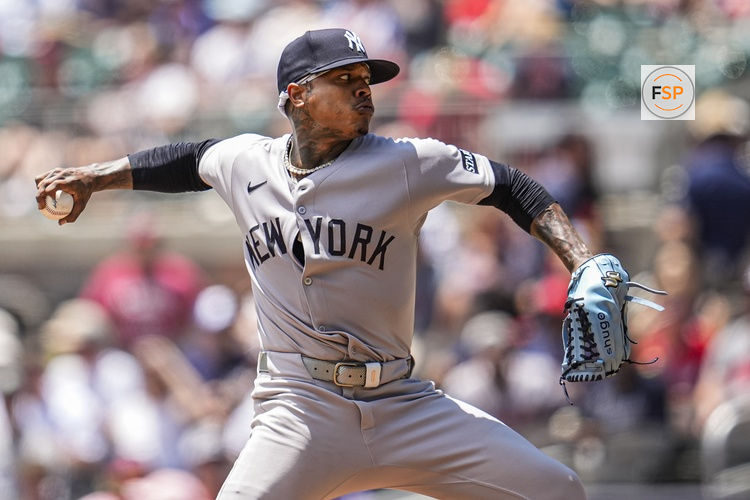
- Marcus Stroman, New York Yankees vs. Tampa Bay Rays
There are only three games on the schedule today, and three of the six starting pitchers are owned in most fantasy leagues, meaning the pickings are extra slim. Beggars can't be choosers, they say, but I'm urging you to be extra choosey even as we beg for scraps.
Cincinnati, Seattle, and Tampa Bay are all at least average offensively (and probably a little better). That's not the type of team we look to go after with streaming pitchers in fantasy, especially as those guys are usually lower-level hurlers. That's the case here today, as I can't really recommend any of these three guys as fantasy options. Let's still look at each pitcher quickly in case you are desperate and want to consider someone for your lineup.
Carrasco was pitching for the Yankees at the beginning of the season but recently joined the Braves and will make his first outing for the team in this one. He was an above-average pitcher in his prime, but Carrasco is cooked. He has had an ERA over 5.60 in four of the past five seasons with a strikeout rate well below average in the last three. Don't count on him against any team, and especially not a competent offense like the Reds.
Stroman is also performing far worse than his career work in limited time in 2025. His walk rate and strikeout rate are both not even close to average, and he has an ERA over 6.00. There's more of a chance for Stroman to find something resembling average work than Carrasco, but it's probably not happening against the Rays here. Skip Stroman in all cases.
Rocker is the one guy I would say is OK to truly consider, though again, I'm not really recommending him for a spot. The rookie has thrown about 60 innings with a walk rate and strikeout rate close enough to average, but he has also been hit hard, allowing 65 hits and 38 earned runs (5.73 ERA). I like Rocker in the right spots due to his pedigree, but the Mariners are playing well offensively (even in a pitcher's ballpark), and Rocker isn't in a spot to succeed.