


Fantasy Hockey Injury Impact for Kevin Fiala and Macklin Celebrini Olympic Breakout
Shelmo breaks down how a frightening Olympic injury has reignited debate about the risks NHL teams take when allowing their stars to compete for international glory in the middle of the season.
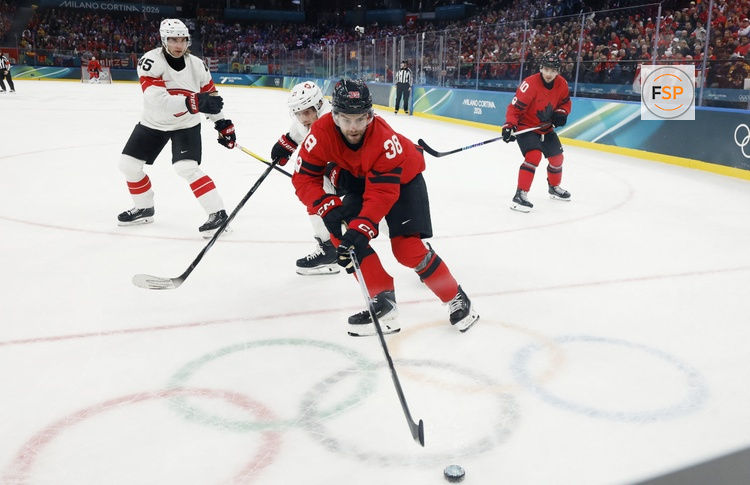
Hey folks. The Olympics are supposed to be a celebration of the sport at its highest level, but this week they delivered a chilling reminder of the razor thin line between glory and disaster. A star forward was stretchered off after a violent collision, instantly shifting the conversation from medal hopes to long-term health and NHL fallout.
For fans, it was heartbreaking. For teams and fantasy managers, it was the nightmare scenario that always lingers in the background when elite talent leaves midseason for international play.
The global stage can elevate a young breakout candidate, restore the shine of a veteran, or cement a player's legacy in a matter of days. It can also derail a season in seconds. With one contender now facing uncertainty and his NHL club bracing for impact, the debate around participation risk versus national pride is once again front and center - and the ripple effects could extend far beyond this tournament.
Let's dive in and take a look at the pros and cons of the Olympics, which bring opportunity but can turn quickly, and the tragic season injury that happened in Milan.
Make sure to check out our Fantasy Hockey Projections. Outlooks at your fingertips that always give you an in-depth snapshot and an accurate outlook of what you expect from every player - all season long. Powered by AI; refined by our experts.
Connect your league to uncover strengths & weaknesses, waiver assistance, trade scenarios, and get instant start/sit clarity.
Opportunity on the World Stage
The Olympic break has delivered exactly what it always promises - breakout performances, reputation shifts, and defining moments. And no player has capitalized on this stage more than Macklin Celebrini.
Skating on the top line alongside Connor McDavid is not a development opportunity. It is a test. The pace is faster, the reads are sharper, and the margin for error is nonexistent. Yet Celebrini has not only held his own, he has produced. He's finding soft spots in coverage, keeping up with elite speed, and making confident plays under pressure against the best players in the world. That matters.
Producing in junior builds hype. Producing in the NHL builds credibility. Producing at the Olympics against hardened veterans builds belief. This is how franchise identities are formed in real time.
Celebrini is proving he can process the game at an elite level, not someday, but now. The confidence is visible. The composure is steady. The chemistry with elite linemates suggests his ceiling may be arriving faster than even optimistic projections suggested.
For dynasty managers, this tournament feels like validation. For redraft managers, it may be the signal that his offensive floor is higher than expected the rest of the season. When a player shows he can thrive next to the best in the world, it reframes expectations entirely.
Is he the next generational centerpiece? I think so. I also think that coming off of this season, regardless of how Team Canada or the Sharks finish, he is going to be a top-five pick next season and beyond and is true keeper status.
Celebrini has 28 goals, 53 assists, and 24 powerplay points in 55 games played as a forward. He also has 190 shots on goal, 29 hits, and 34 blocked shots.
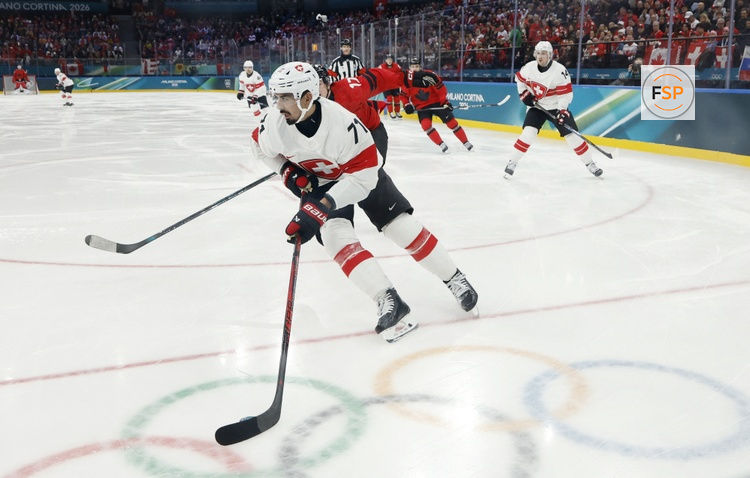
Tragedy in an Instant
Then there's the other side of international competition.
Kevin Fiala entered the tournament with medal aspirations and strong NHL momentum. Instead, he exited on a stretcher following a tangle up on the boards against Tom Wilson. Whether the collision was malicious or simply unfortunate is secondary to the outcome - the result is season ending. He was taken off the ice in a stretcher, stomach down, with a brace holding his left leg in place.
This makes me think of his previous injury where he suffered a fracture in his left femur and required surgery. Hoepfully this is unrelated, but if it's a similar injury this could not only be season ending, but career changing.
For Team Switzerland, it's devastating. For the Los Angeles Kings, it's seismic.
Fiala is not a secondary scorer. He drives offense, contributes heavily on the powerplay, and provides the type of dynamic transition play that stretches defensive coverage. Removing that element from the Kings' lineup changes deployment, matchup strategy, and scoring distribution.
And the timing could not be worse.
Los Angeles had already pushed its chips to the center of the table by acquiring Artemi Panarin in a clear all-in move. Futures were moved. The organization signaled urgency. This was about maximizing a competitive window and taking a legitimate run at the Stanley Cup.
Now one of their core offensive weapons is gone.
The Kings did not make a splash trade to maintain the status quo. They did it to raise their ceiling. Losing Fiala lowers it. Panarin now carries even greater offensive responsibility, depth lines must absorb expanded roles, and the powerplay configuration becomes less stable.
From a fantasy perspective, the implications are immediate and significant.
Fiala managers in redraft formats are now forced to pivot entirely. There is no stash-and-wait scenario because this is confirmed to be season ending. Dynasty managers must evaluate recovery timelines and potential long-term impact, though there is no indication yet that his future productivity is permanently compromised.
For Kings' skaters, opportunity will emerge. Increased ice time and elevated roles often create short-term value spikes. But replacing Fiala's production is not as simple as promoting the next man up. The offense will redistribute, and that creates volatility.
Fantasy managers should monitor line combinations closely when NHL play resumes. Secondary scorers could see temporary boosts, but efficiency without Fiala's play-driving presence remains an open question.
Fiala had 18 goals, 22 assists, and 17 powerplay points in 56 games played as a forward. He also had 147 shots on goal, 39 hits, and 24 blocked shots.
The Olympic Gamble
There is clearly a significant risk vs. reward for NHL players. This is the tension at the heart of NHL participation in the Olympics.
For players like Celebrini, the reward is unparalleled. Best on best competition. National pride. A chance to win gold on the biggest international stage the sport offers. Outside of the Stanley Cup, there is no greater spotlight.
For veterans, it is legacy defining. For young stars, it is a proving ground. The experience can elevate confidence, raise league wide perception, and even enhance market value. A strong Olympic performance can shift the trajectory of a player's career, regardless if they are an up and coming star or a grizzled veteran.
Take defensemen Drew Doughty for example. While not the player he once was, he continues to prove that in best on best international play; his compete level is unmatched even at 36 years old with a lengthy resume of injuries.
But glory aside the risk is real, and it is unforgiving.
An awkward collision. A mistimed hit. A vulnerable position along the boards. The difference between glory and disaster can be measured in a split second. When that moment goes wrong, NHL teams absorb the consequences.
General managers understand this tradeoff. They want their players representing their countries. They want the league's talent showcased globally. They want the growth and prestige that comes with best on best international hockey.
What they do not want is to lose core contributors in February during a playoff push.
The Kings are now living that reality. An aggressive trade deadline move intended to strengthen a championship bid has been undercut by an injury sustained outside NHL competition. The margin for error shrinks. The depth chart tightens. The pressure increases.
And yet, the Olympics will always tempt the game's best. No matter the risk, there is not an NHL player in the league that would pass up the opportunity to win Olympic gold for their country, despite what the NHL, or franchise owners say or protest about the risk. At the end of the day, for each NHL franchise these players are assets. Assets tied to momentum, large amounts of money, and well-timed team building strategy.
Because for every devastating injury, there is a breakout performance that elevates a player's trajectory. For every season altered, there is a legacy cemented. That duality is what makes the tournament compelling and dangerous at the same time.
The Olympic stage can create heroes or reshape seasons in an instant.
This year, it has already done both.