


NHL Trade Frenzy Continues: Breaking Down Three More Major Deals
Shelmo discusses three recent NHL trades leading up to the 2026 Entry Draft, including a major addition in Washington, a shifting roster direction in Buffalo, and a youth focused swap between Colorado and Nashville.
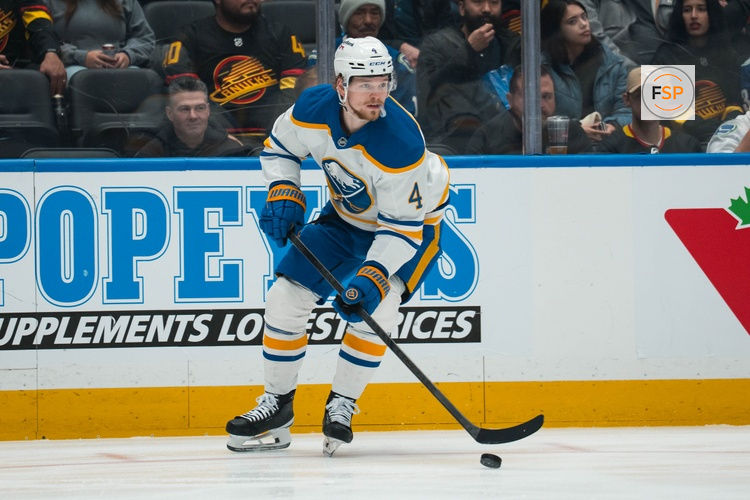
Hey folks. The trades keep coming in as the 2026 NHL Entry Draft still approaches. The trade market continues to heat up with a steady mix of roster retools, prospect movement, and win-now decisions. Front offices are navigating the delicate balance between building for the future and taking advantage of current windows, and the result has been a series of moves that are already beginning to reshape the league landscape.
Some teams are clearly leaning into competitive pushes, adding established talent to support their current cores, while others are doubling down on draft capital and young assets as they chart a longer-term path forward. In between those two approaches, we're seeing a growing number of hockey trades that reflect teams trying to fine-tune their identity without fully committing to either direction.
Let's dive in on some more huge deals.
Make sure to check out our Fantasy Hockey Trade Analyzer. Real-time trade insights at your fingertips that give you an in-depth snapshot of each player's true market value - all season long. Powered by AI; refined by our experts.
Sabres and Blackhawks Trade
To the Chicago Blackhawks: Bowen Byram, Jordan Greenway
To the Buffalo Sabres: Fourth overall pick (2026 NHL Entry Draft), 45th overall pick (2026 NHL Entry Draft), Louis Crevier
Connect your league to uncover strengths & weaknesses, waiver assistance, trade scenarios, and get instant start/sit clarity.
Fantasy Breakdown
The Chicago Blackhawks made a significant move aimed at accelerating the support around Connor Bedard, acquiring Byram and Greenway in exchange for a package built around the fourth-overall pick in the 2026 NHL Entry Draft, along with a second-round selection and Crevier. It is the type of trade that signals a team trying to shift from a pure rebuild into a more competitive phase sooner rather than later.
Byram is the clear centerpiece here, and while he has not yet fully reached the ceiling many projected for him early in his career, there is still a strong belief that the breakout potential remains intact. A change of scenery into a young, high-talent environment in Chicago could be exactly what unlocks that next step. He is joining a roster that is still forming its identity, and that often creates the kind of opportunity young defensemen need to take on heavier minutes and more responsibility.
Greenway adds a very different element, bringing size, physicality, and a straightforward depth role that should help support Chicago's younger forwards. While not a major fantasy driver, he does fill an important structural need for a team trying to transition its roster into something more competitive.
From Buffalo's perspective, this is a major asset accumulation move. Moving the fourth-overall pick is significant on its own, but adding a second-round pick and a roster player in Crevier gives them additional flexibility in how they continue to reshape their roster. This is the kind of deal that suggests Buffalo is comfortable leveraging high draft position into multiple assets rather than committing to a single top-tier prospect.
From a fantasy standpoint, the biggest takeaway is opportunity distribution. Chicago is betting on Byram taking a step forward in a larger role, while Buffalo continues to prioritize future flexibility and draft capital. Both teams are clearly operating from different timelines, but both are also addressing specific organizational needs.
That said, I still lean slightly toward Buffalo winning this deal in terms of pure asset value. A fourth-overall pick, a second-round pick, and a roster player is a strong return for a player who is still searching for full consistency at the NHL level, even if his long-term upside remains very real.
Bowen Byram had 11 goals, 31 assists, and seven powerplay points in 82 games played as a defensemen. He also had 109 shots on goal, 50 hits, and 93 blocked shots.
Jordan Greenway had one goal, five assists, and zero powerplay points in 40 games played as a forward. He also had 32 shots on goal, 56 hits, and 22 blocked shots.
Crevier had seven goals, 18 assists, and 63 penalty minutes in 78 games played as a defensemen. He also has 114 shots on goal, 124 hits, and 95 blocked shots.
Capitals and Sabres Trade
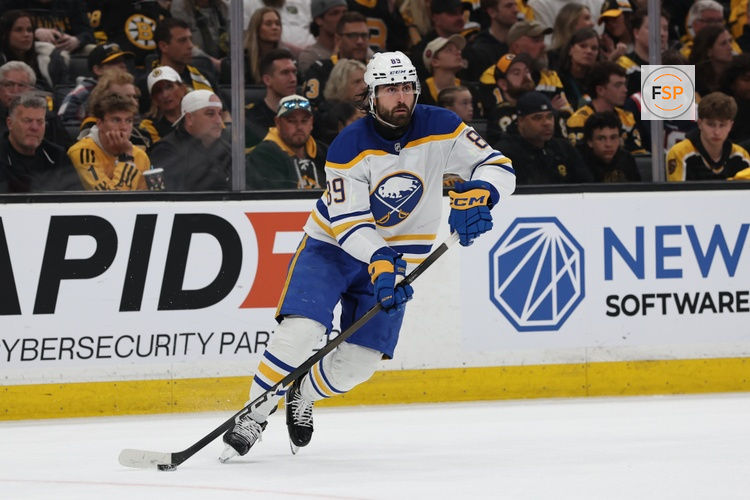
To the Washington Capitals: Alex Tuch
To the Buffalo Sabres: Third-round pick (2026)
Fantasy Breakdown
The Washington Capitals continued their aggressive roster build by acquiring Tuch from the Buffalo Sabres in a sign-and-trade deal, sending a third-round pick the other way in return. It is one of those transactions that immediately stands out not because of the asset return itself, but because of the context surrounding the player and how quickly Washington moved to get the deal finalized.
Tuch had long been viewed as a player with Buffalo as a preferred destination, and there was a growing sense that he was comfortable with his role and long-term outlook there. Seeing him moved in a sign-and-trade scenario shifts the narrative significantly, especially considering how rare it is for teams to extract even modest value when a player is not expected to re-sign. In that sense, Washington did well to secure a third-round pick in return, which is better value than many comparable sign-and-trade situations around the league in recent years.
Tuch inked an eight-year deal with a $10.5M AAV as part of this deal.
From Washington's perspective, this is another clear indication that they are fully leaning into their competitive window. Adding Tuch gives them size, speed, and secondary scoring capability that fits extremely well alongside an already retooled roster. Whether this is about maximizing the final stages of their current core or keeping things competitive around the Alex Ovechkin era, the direction is becoming increasingly clear.
From Buffalo's side, this is still a reasonable outcome given the circumstances. Losing a player like Tuch for a mid-round pick is never ideal, but when extension expectations fall apart, recovering any asset at all becomes meaningful.
From a fantasy perspective, this is where things get interesting. Tuch immediately becomes one of the more intriguing players to watch heading into next season because of how dramatically his environment has changed. A fresh role in Washington, combined with a more aggressive team structure, could open up new scoring opportunities and shift his usage in a positive direction.
Overall, this feels like a win-win in different ways. Buffalo salvages value in a difficult situation, while Washington continues to stack useful NHL pieces as they push toward maximizing their current competitive window. The Capitals are clearly not done shaping this roster, and this move reinforces that direction.
Tuch had 33 goals, 33 assists, and nine powerplay points in 79 games played as a forward. He also had 195 shots on goal, 82 hits, and 90 blocked shots.
Predators and Avalanche Trade
To the Nashville Predators: Jack Drury, Chase Bradley, third-round draft pick (2029)
To the Colorado Avalanche: Fedor Svechkov, Zachary L'Heureux
Fantasy Breakdown
The Nashville Predators and Colorado Avalanche swapped a mix of young roster players and future assets in a quieter depth-focused trade that does not carry major fantasy implications at the NHL level, but still represents a meaningful organizational shuffle for both sides.
From Nashville's perspective, acquiring Drury adds a dependable depth center who can help stabilize the middle and bottom of the lineup. He is not a high-end fantasy contributor, but he does bring utility in real-world roster structure, faceoff depth, and defensive reliability. Bradley adds further organizational depth, while the inclusion of a third-round pick in 2029 gives Nashville additional long-term flexibility as they continue to balance immediate roster needs with future planning.
For Colorado, this is more of a projection based move. Svechkov and L'Heureux both represent younger upside swings who could grow into more impactful roles depending on development trajectory and opportunity. The Avalanche have typically been comfortable betting on skill and upside in their prospect pipeline, and this move continues that trend even if neither player is expected to make an immediate fantasy impact.
From a fantasy perspective, there is very little short-term movement here. Drury does not project as a player who will significantly alter lineup decisions in standard formats, and the incoming prospects remain longer-term considerations in dynasty leagues at best. Additionally Drury is going to a much worse team, and no amount of added ice time can insulate that fact. This is more about organizational structure than fantasy relevance.
Overall, Nashville likely gets the more immediate value with Drury and the added draft pick, while Colorado continues to lean into upside and future development paths. It is a relatively balanced trade in terms of intent, but not one that will register heavily for fantasy managers heading into next season.
Jack Drury had 10 goals, 17 assists, and zero powerplay points in 82 games played as a forward. He also had 99 shots on goal, 46 hits, and 56 blocked shots.
Svechkov had four goals, 13 assists, and 22 penalty minutes in 70 games played as a forward. He also had 70 shots on goal, 60 hits, and 29 blocked shots.