





















Should You Draft Running Backs or Wide Receivers First in Fantasy Football?
A look at total fantasy points and the percentage of decrease that RBs and WRs experience among the best players at those positions in fantasy football.
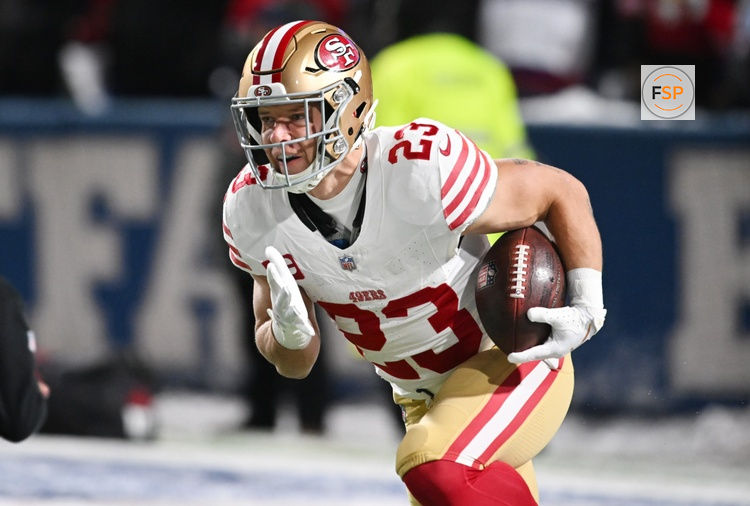
Your first few picks in fantasy football matter more than anything later in the draft. Sure, it's a major benefit to find a weekly starter down in the 10th round or later, but most of those players in the second half of your draft are going to be victims of roster churn, able to be dropped when other needs arise.
The top five rounds are generally where the majority of fantasy points come from, so getting top performers, particularly at running back and wide receiver, is a necessity. When you get to the middle rounds, it's a mix of finding good depth players who can fill in some weeks and high-ceiling guys who are either rookies, in a new situation, or just expected to break out for any number of reasons.
Knowing you need to hit, it then becomes a matter of who to pick, both in terms of which individual players to grab and which positions to target. The biggest decision usually comes down to running back versus wide receiver. Some of it depends on who goes off the board before you pick, but it's also good to know which direction you want to focus your first few selections before you get to your draft.
Wish a real fantasy expert could break down your team, not just spit out generic advice? Now you can - get a personalized Team Breakdown, tailored for your exact league.
Running Back or Wide Receiver in Round 1?
Last year, I went through the previous three seasons' fantasy scores among the two positions in both standard scoring and PPR leagues with two goals: to see which position scored more at the top and to find who lost points more quickly as we went down the rankings of top scorers.
Go back and read that whole breakdown at the link above if you want to get more in-depth, but the results were very clear. Standard leagues were straightforward: in all three seasons from 2021-2023, the average running back scored more in the top 10 at the position than the same group of wide receivers. Backs then lost points at a higher rate as we went down the list, and receivers began scoring more than running backs at around the 30th player.
That means the starting running back on each team was a better fantasy player by points than their top wide receiver as a general rule. When we get to the second player on each team at those positions, the WR2 on each team easily outscored the RB2. That's not a surprise, but the further we get past the top 30, the more receivers really dominated compared to their running counterparts.
What this tells me is that targeting running backs earlier is more important because you can find more usable receivers later in your draft, and it's easier to find those pass catchers who can make an impact on the free agent market during the season. By getting a few backs early, you secure players who are in higher demand and less available after the first five rounds or so.
Connect your league to uncover strengths & weaknesses, waiver assistance, trade scenarios, and get instant start/sit clarity.
PPR is a little different at the top because WRs score more points than the best RBs. In all three seasons of the sample, the average of the top 10 receivers scored more than the top 10 running backs. As we go further down the list, it follows the same pattern in that backs lose fantasy points much quicker down the rankings than receivers do, showing more consistency again from the pass catchers.
This could be an argument for looking at one of the top few wide receivers with your first pick because they score more in PPR, but you can find similar players easier in later rounds than you can at running back, so even those extra points from catching passes don't change the equation enough for me; I'm still focused on running backs in the first few rounds because they are a tougher commodity to acquire.
2024 Results
With another season of information, we can easily see if those trends continued or turned in the most recent games. Standard leagues showed the exact same results, as the top running backs outscored the top receivers, and those RBs then lost points much faster as we went down the rankings, with receivers scoring more after the top 30.
In PPR leagues, running backs actually flipped the script at the top. The top backs scored more than the top receivers in PPR, and WRs didn't take over until after the top 20. Running backs still lost fantasy points faster than receivers at every level, so again, those top players were even more valuable.
Why You Should Target Running Backs First
This isn't about raw point totals as much as it is about supply and demand. Most leagues start two running backs and two wide receivers along with a flex, so the same number of players are needed for each position. Even if you start three receivers, that doesn't change the fact that everyone will have at least two backs in their lineup each week, meaning those top 30 are precious commodities that aren't easy to replace.
With more wide receivers scoring more points, especially after the top 30 at the position, you can find feasible fantasy starters after the fifth round and even build essentially your whole position group after that time and not feel ill effects the same as if you miss on all the top running backs.
There are some who argue that running backs are too fungible and suffer too many injuries, so focusing on guys who are more consistent from year to year, like the top receivers, is a better way to go. I can see some reasoning in that strategy, but injuries can happen to anyone at any time; it's impossible to predict. Getting more high-level (or potentially high-level) running backs means more chances to hit big at a scarcer position while knowing you can find more receivers later.
My favorite strategy is to take three running backs in the first four rounds, usually mixing in a wide receiver or maybe a top tight end, like Brock Bowers. The numbers bear it out every season that more receivers score at a higher level than running backs. Because of that, I will always focus on backs early while picking up receivers later in the draft.