

























FantasySP Fantasy Football Trade Analyzer: How it Benefits You and How AI is Making It Better
A look at FantasySP's Trade Analyzer and how it is helping fantasy football owners become better and more informed.
Here at FantasySP, we have many tools to help you prepare for the fantasy football season. From ADP rankings to defensive rankings to the “Who Should I Start?” feature, all the pieces are in place to set you up for a successful draft. That doesn't mean everything will go according to plan, but no one can say you didn't put in the effort if you take advantage of everything available.
If the draft doesn't go your way, then trades are the next best way to shape your roster before the season starts. Luckily, we also have an improved Trade Analyzer tool with updated AI features that can break down a potential trade not only with the players involved but also factoring in your entire roster.
Let's look at the Trade Analyzer a little closer, including what it does, how it is most beneficial, and how the improved AI helps you decide if the trade in question is right for you.
Wish a real fantasy expert could break down your team, not just spit out generic advice? Now you can - get a personalized Team Breakdown, tailored for your exact league.
Connect your league to uncover strengths & weaknesses, waiver assistance, trade scenarios, and get instant start/sit clarity.
What is the trade analyzer?
The FantasySP Trade Analyzer is fairly self-explanatory: plug in the players, let it calculate based on ratings assigned to each player, and wait for the results to tell you whether a trade is fair or if one team is taking a major downside in value. It is a tool to help you evaluate the perceived value of each player involved given their past, present, and expected future.
There is a difference between chasing upside, filling a position, and turning good pieces into stars. Every trade looks to accomplish different things. While the Trade Analyzer's initial function is to simply look at value in a vacuum, there are more parts and pieces that are improving how it works and what it does to benefit users.
What features does the trade analyzer provide?
I was talking to a friend the other day who was lamenting the fact that no one in his leagues will really consider trades. When they do, they want to offer something like Aaron Rodgers for De'Von Achane, arguing that Rodgers will “score more points.” No one wants to make fair trades; they want to win trades.
A trade is all about finding something that is fair for everyone involved and helps both teams. It might work out that one team benefits more than the other in the end, but we don't know the future. Trades should be made with the idea that each fantasy owner is getting what he or she needs to make their best team possible.
What our analyzer helps with is looking at different perspectives. It will give a basic value proposition, making sure the players are functionally equal enough for the trade to make sense; consider position value and whether it makes sense to trade a top receiver for a top quarterback, for instance; evaluate how players fit into your specific roster/lineup (more on that below); look at health and risk factors related to each player; and more.
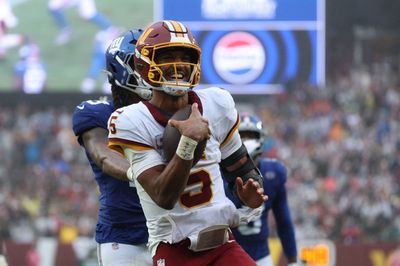
Being able to sync your team so that the analyzer knows how the trade will affect your overall outlook is one of the most invaluable parts of this tool. Just for the sake of trying it out, I tried finding two similar players at different positions and found a successful comparison in Jayden Daniels versus Davante Adams. While Daniels was seen as slightly more valuable, the trade was graded as fair. This is where specifics come into play.
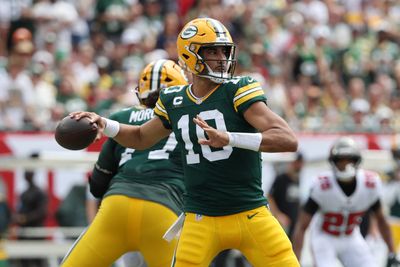
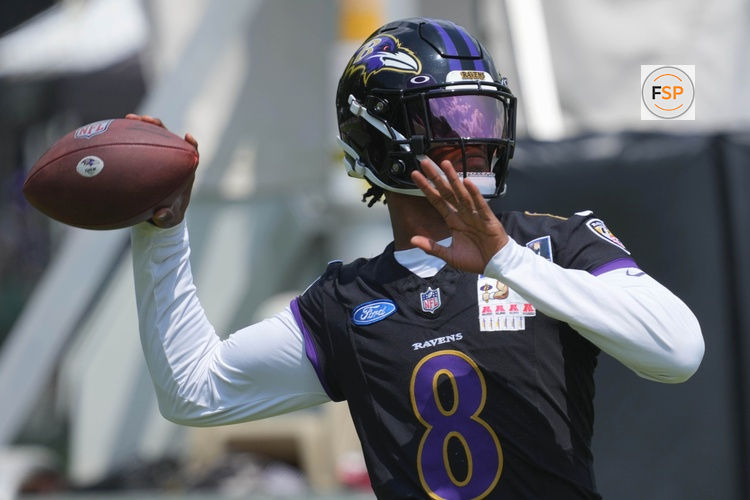
If you are the one acquiring Daniels, it would make sense if your starting quarterback was someone like Jordan Love, a decent fantasy player but someone who fits more as a streamer than a weekly starter. If you already have Lamar Jackson, though, then getting rid of a highly valuable receiver doesn't make sense when either Jackson or Daniels will have to sit on your bench every week.
By plugging in your roster first, the analyzer will let you know what the move would do to your receiving corps and whether that's worth it to get the potential improvement from Daniels. These are things that you would think about when looking at your own roster, but a generic AI tool simply with rankings wouldn't factor in all the moving pieces. Our Trade Analyzer tool, now powered by improved AI, is more adept by taking in the whole scope of a trade and giving you the pros and cons of making a move.
How is AI improving the product?
It's easy to hate AI, fear AI, or think that it will eventually put most humans out of work. The Terminator franchise went in depth on the issues before any of it seemed like a true reality. No matter what your thoughts, it's impossible to deny that AI can be a helpful tool in many areas.
Fantasy sports is one of those areas. Much of fantasy analysis (and sports analysis in general) is based around numbers, and AI can easily parse through data and spit out an evaluation of what it is seeing, pointing to trends, history, and more that brings extra meaning to those numbers.
AI essentially has access to everything on the internet and any other information that a user or programmer feeds into it. I taught high school math for six years and recently had a conversation with a few friends who are still in the profession, and the subject of AI as a teaching tool came up. My stance was that while AI can't necessarily tailor a lesson to student needs (especially if that student doesn't know the right questions to ask), it does have access to more knowledge than any teacher possibly could. Letting AI be a tool in the process that provides invaluable knowledge which is then shaped in a usable way by the teacher is probably the most efficient way to get across the most accurate information on literally any subject.
When we factor this into the Trade Analyzer, the AI tool is looking at numbers from the past and present then factoring it into the expected future in just seconds when it would take a human minutes or even hours, depending on how deep they wanted to dig. This tool allows you to try every combination of players you could think of in the time it would take you individually evaluate just one group of guys. It also pulls from hundreds of sources online, so every little nugget can be found, and false reporting and spoof social media accounts etc. can be filtered out. Nothing will get by this AI tool.
Example Trade Breakdown
For a more complete example analysis, we can use a proposed trade that was shared by FantasySP's founder and CEO, Brant Tedeschi.
Team 1 Acquires:
Team 2 Acquires:
- Lamar Jackson
- Jameson Williams
- Trevor Lawrence
The analyzer starts with a simple value breakdown, assigning Team 1's bounty worth 62 points of value and Team 2's worth 60 points. It's a slight win for Team 1, but it's close enough that the analyzer says it's a fair trade. That's the baseline of what you would expect from any analyzer tool.
It goes further, though. The Trade Analyzer then jumps into each player individually, telling us, for instance, that Jackson is a clearly elite QB1, while Murray is a more middling QB1. That's easier analysis for us to find ourselves, but it's a more useful tool when looking at relatively lesser-known guys, like telling us that Williams is an "ascending WR2 with upside," and that Mixon has a major red flag because of a foot injury that is threatening his availability for Week 1.
The analysis then goes into a team-specific breakdown. A few of the most interesting notes include:
- Team 2 will lose their only rostered tight end, so not only are they losing a top player at the position in McBride, but there is no fill-in ready to pop into the lineup, meaning further moves are needed.
- Team 2 gains a good player in Williams, but they are already strong at wide receiver, with guys like Malik Nabers, Brian Thomas, A.J. Brown, Courtland Sutton, etc., so Williams is redundant and not necessarily as good of a pickup as it might seem.
- Team 1 doesn't have to be concerned with Mixon's immediate status because they already have Jahmyr Gibbs, Derrick Henry, and Breece Hall, so it's more about a season-long play for depth than an immediate need. This is probably one of the most in-depth analyses that the system makes and something that an owner might not be thinking about the same way they would with the backlog of receivers.
There is then a look at the likelihood of each player starting in a given week, noting that McBride and Jackson are must-start fantasy guys while Lawrence is more of a bench player who is better for streaming or filling a bye week. Another note about Mixon's foot injury pops up near the bottom while noting that everyone else is healthy so far.
The Trade Analyzer then gives us a final recommendation, saying that it approves the move for Team 1 but doesn't like it for Team 2. Though Team 2 is probably getting the best player in Jackson, the positional backlogs and unlikelihood of Williams and Lawrence starting often means they are giving up a top tight end and a starting running back for a simple upgrade at QB. Some tables and charts are provided at the bottom for those who are more self-analytically inclined, but everything is laid out before we even get to that point.
Not only did the analyzer go through each player and the value of the groups as a whole, but it also told us the fallout for each team and how it would play out in a real-life fantasy situation. This is much more than a value tool; FantasySP's Trade Analyzer gives us a full breakdown the way you would expect from experts when looking at an actual NFL trade at the biggest outlets, like ESPN or NFL.com.
Conclusion
AI and, for our purposes, the Trade Analyzer tool are here to make your life easier. If you learn how to use these features for your benefit, they become as valuable as any amount of personal research in the pursuit of success in fantasy football. We fix the shortcomings of fantasy hosting websites and news feeds to bring you the most complete analysis available.
To quote Tedeschi, "This thing is badass. I'd never trade without giving it a breakdown (first). You may think you don't need something like this until you actually try it. It's not just for newbies; it can even rework trades in ways you didn't think of before." So, this isn't just a trade analyzer, but it's also a trade fixer that can use your roster and rework a deal or give you several variations to present to a potential trade partner, covering all bases ahead of time. With so much information, rival owners will be much more willing to negotiate when seeing the analysis in real time.
Practice with these tools, learn from them, and use things like the Trade Analyzer to show other owners why trades are fair; you might just talk someone into making a deal if they are on the fence. Be skeptical of AI but don't simply pooh-pooh it because either you don't understand it or are afraid of what it might do. These tools are here to help us, and you can become a better fantasy football player because of them.